When investing in technology, whether it’s a home theater, network infrastructure, security system, or commercial AV setup; most people focus on the equipment itself.
Bigger TV. Better speakers. Faster Wi-Fi.
But there’s one critical component that often gets overlooked:
Power quality.
Clean, stable power is the foundation of reliable technology. Without it, even the best equipment can underperform, fail prematurely, or experience frustrating glitches.
Power conditioning is not an accessory. It’s infrastructure.
What is power conditioning?
Power conditioning devices are designed to:
- Protect against power surges and spikes
- Filter electrical noise
- Stabilize voltage fluctuations
- Improve equipment reliability
- Extend the lifespan of electronics
Not all electricity is “clean.” Voltage dips, spikes, and interference can damage or degrade sensitive electronics over time.
Modern smart homes and businesses rely on advanced processors, network switches, displays, amplifiers, and control systems, all of which require stable, protected power.
Why It’s Critical for Residential Applications
Today’s homes often include:
- Whole-home audio systems
- High-end televisions and projectors
- Network racks with switches and access points
- Smart lighting processors
- Surveillance systems
- Automation controllers
These are not simple plug-and-play gadgets; they’re integrated systems with significant investment behind them.
Protecting Audio Equipment
High-performance amplifiers and processors are sensitive to power fluctuations.
Poor power quality can result in:
- Audio distortion
- Reduced amplifier efficiency
- Random shutdowns
- Long-term component wear
Power conditioning filters electrical noise and stabilizes incoming voltage, helping audio systems perform consistently and reliably.
Protecting Televisions & Displays
Modern displays are complex, processor-driven devices.
Power surges or brownouts can cause:
- Internal board damage
- HDMI port failure
- Premature backlight degradation
- System crashes
A properly installed power conditioning solution helps safeguard that investment, especially during storms or utility fluctuations.
Protecting Networking Equipment
Networking hardware is the backbone of a smart home.
Switches, routers, firewalls, and access points operate continuously. Even minor voltage inconsistencies can cause:
- Random reboots
- Network drops
- Data corruption
- Reduced hardware lifespan
Power conditioning helps ensure stable operation and reduces mysterious “internet issues” that are often power-related.
Extending Equipment Lifespan
Electronics degrade over time due to heat and unstable power.
By filtering electrical noise and preventing voltage spikes, power conditioning:
- Reduces stress on internal components
- Minimizes random failures
- Protects sensitive circuitry
- Preserves warranty coverage
In both residential and commercial settings, protecting equipment extends the return on investment.
Commercial Applications: Even Higher Stakes
In commercial environments, power reliability is even more critical.
Technology downtime can impact:
- Retail sales
- Restaurant POS systems
- Office productivity
- Security systems
- Surveillance recording
- Warehouse communication
Commercial AV systems, digital signage, and network infrastructure often operate for extended hours, sometimes 24/7.
Power conditioning in commercial applications:
- Reduces downtime
- Prevents equipment damage
- Protects critical infrastructure
- Supports long-term operational reliability
For businesses, even a short outage can cost far more than the investment in proper protection.
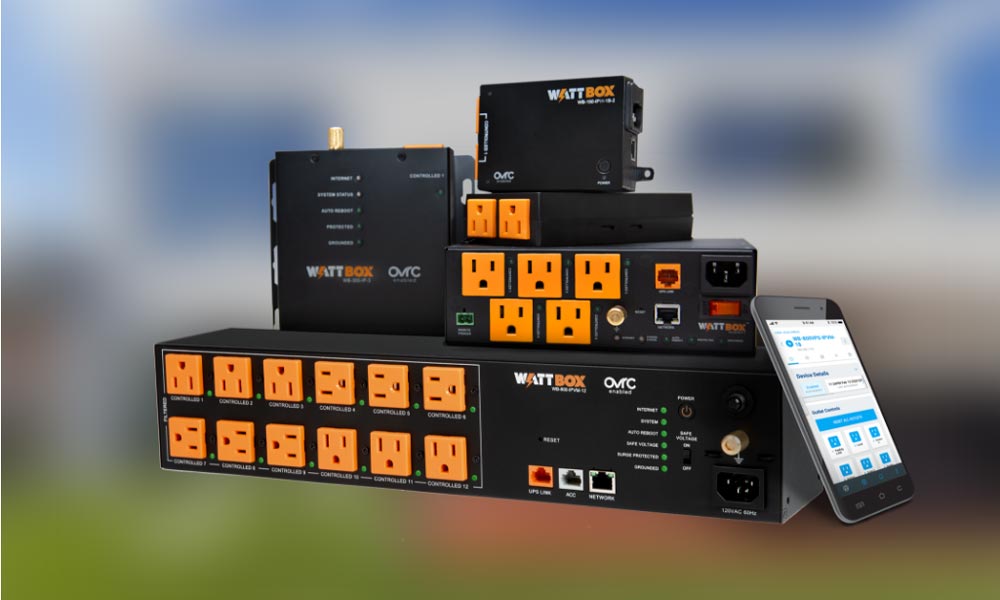
IP-Controlled Power: Smarter Protection with Wattbox
Modern power solutions go beyond surge protection.
WattBox
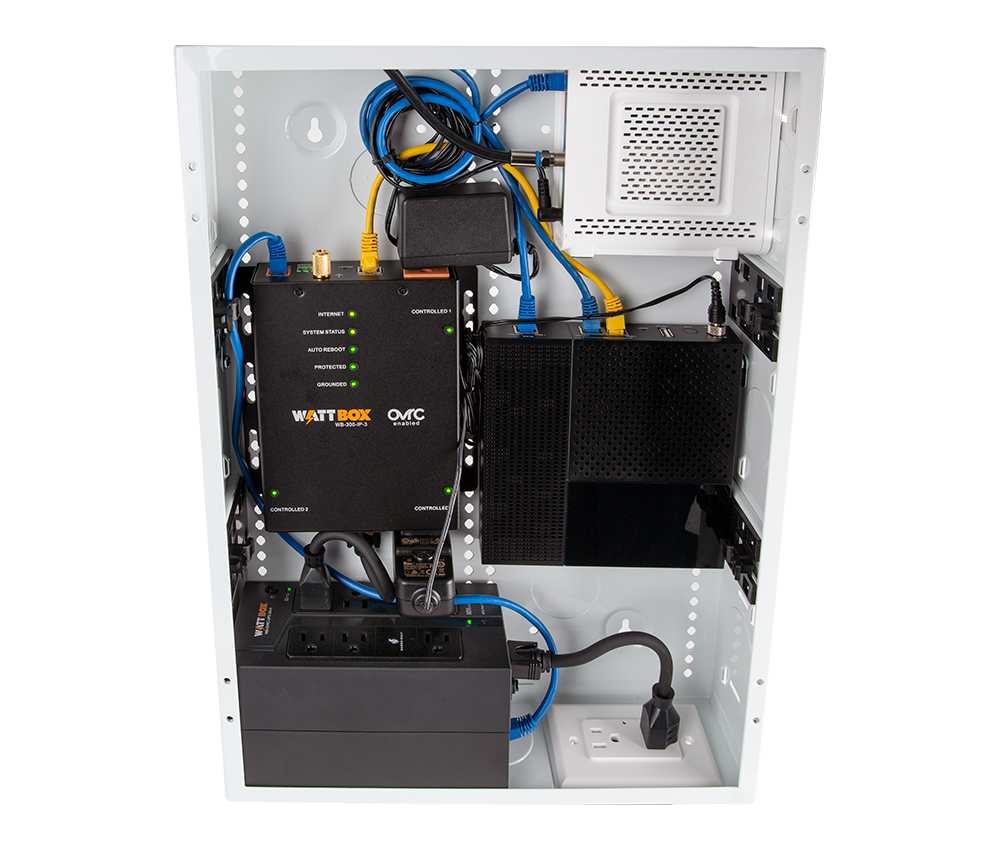
Wattbox IP-controlled power conditioners add intelligent outlet management to traditional protection.
What Makes IP-Controlled Outlets Powerful?
- Individual outlet control
- Remote power cycling
- Scheduled reboots
- Automatic device resets
- Remote access from anywhere
Easy Access for Homeowners & Business Owners
IP-controlled power systems also allow end users to:
- Reboot individual devices from an app
- Turn outlets on or off remotely
- Schedule power cycles
- Monitor outlet status
Instead of crawling behind a rack or unplugging a device blindly, you can manage power cleanly and safely.
It’s smarter infrastructure, not guesswork.
Decreasing Support Costs Through Automation
One of the most common technology issues, in both homes and businesses, is simple:
A device needs to be rebooted.
Instead of:
- Rolling a truck
- Scheduling a service call
- Unplugging equipment manually
An IP-controlled power conditioner can:
- Automatically detect a network outage
- Reboot a modem or router
- Reboot a device, like a TV
- Restore connectivity within minutes
This dramatically reduces support costs and service interruptions.
For business owners, that means less downtime.
For homeowners, that means fewer frustrating tech moments.
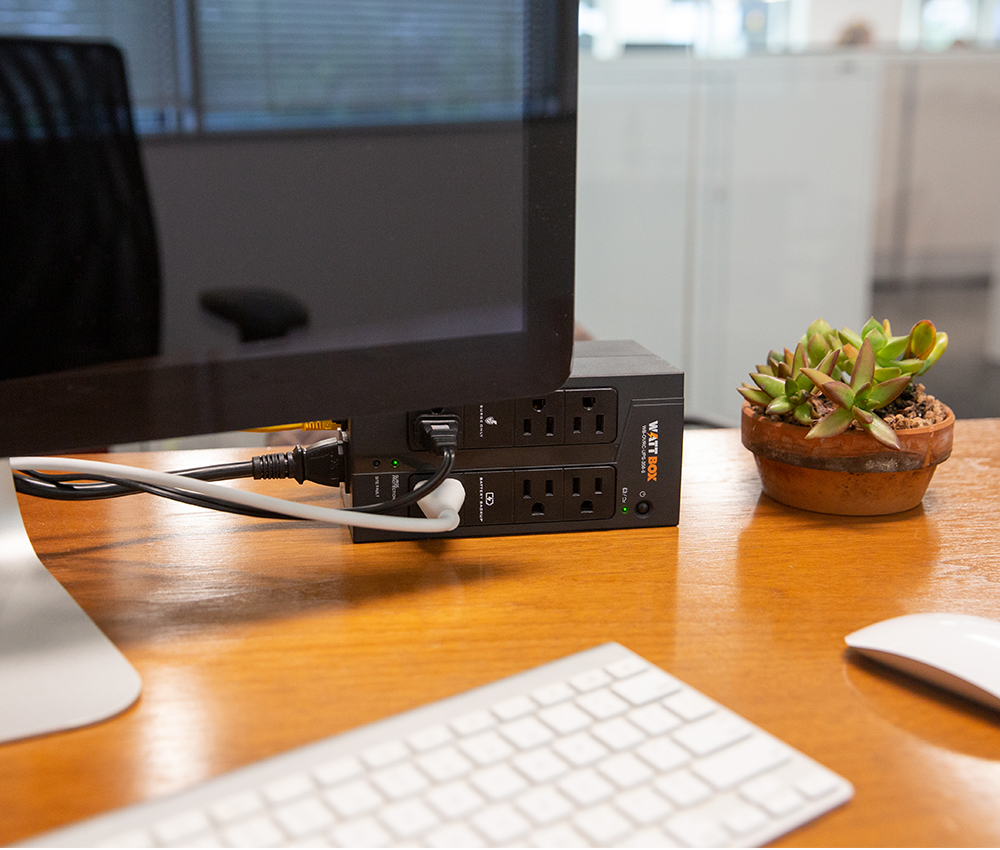
Adding a UPS: Bridging the Power Gap
Power conditioning protects equipment, but it doesn’t keep it running during an outage.
That’s where a UPS (Uninterruptible Power Supply) comes in.
A UPS provides short-term battery backup power when utility power drops.
Why a UPS Matters
Even a brief power interruption can:
- Crash network equipment
- Interrupt security recordings
- Corrupt data
- Force lengthy system reboots
- Disrupt business operations
A properly sized UPS keeps critical equipment running long enough to:
- Ride through short outages
- Allow generators to come online
- Perform safe shutdowns
- Maintain internet and security systems
“But I Have a Generator…”
Generators are excellent for extended outages, but they do not activate instantly.
There is typically a delay of several seconds between power loss and generator startup. During that window:
- Equipment shuts off
- Networks crash
- Automation systems reboot
- Security systems may drop
A UPS bridges that gap.
It keeps essential systems powered during the transition, creating seamless continuity even in buildings equipped with whole-home or commercial generators.
For many clients, we prioritize UPS protection for:
- Network infrastructure
- Security systems
- Control processors
- VoIP phone systems
- Point-of-sale systems
- Critical AV equipment
Why Professional Integration Matters
Not all surge protectors are created equal.
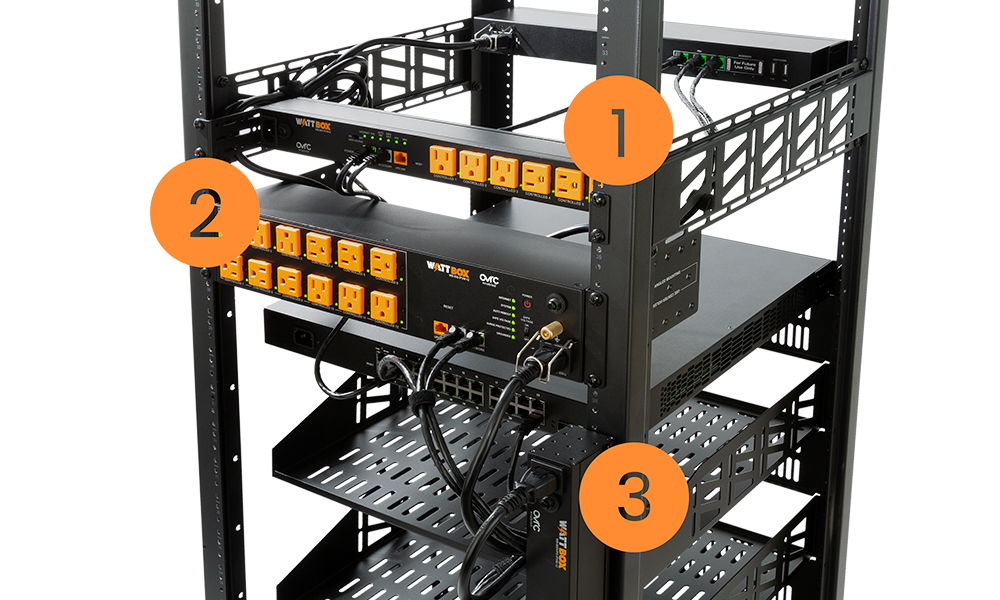
True power conditioning requires:
- Proper load calculations
- Rack integration
- Dedicated circuits when needed
- Clean cable management
- Intelligent programming for IP-controlled systems
Professional integrators design power systems as part of the overall technology architecture — not as an afterthought.
In a properly designed system:
- Networking equipment is protected
- Audio systems are on filtered power
- Automation processors are safeguarded
- IP-controlled outlets are programmed intelligently
Power becomes part of the reliability strategy.
Final Considerations
Technology investments deserve protection.
Whether in a home theater, office, restaurant, warehouse, or retail space, power conditioning:
- Protects equipment
- Reduces downtime
- Improves reliability
- Extends lifespan
- Lowers support costs
With intelligent IP-controlled solutions like Wattbox, power protection isn’t just defensive, it becomes proactive.
Clean power isn’t flashy.
You won’t see it on the wall.
You won’t hear it in the speakers.
But you will notice when it’s missing.
If you’re investing in smart technology, make sure the foundation, your power infrastructure, is just as strong as the equipment it supports.
That’s how you build systems that last.
Let’s create #ASmarterTomorrow — together.