High-quality audio isn’t just about loudness; it’s about clarity, immersion, and how sound integrates into your space. Whether you’re upgrading your home entertainment setup or selecting an audio system for your commercial environment, understanding system types, speaker options, and installation considerations will help you get the most value and performance for your budget.

Audio Systems for Homes
Selecting the right audio system for a residence involves balancing performance, budget, and aesthetic preferences. Here’s how to approach it based on common homeowner needs.
Audio Quality Levels by Budget
Entry Level (Everyday Enjoyment)
For many homes, a system that delivers clear music and solid performance without a premium price tag is ideal. These systems are perfect for casual listening in living rooms, kitchens, or bedrooms.
- Sonos – A popular choice for reliable wireless audio with easy control via app or voice. Great for streaming music throughout your home with minimal setup.
- Strengths: Easy to use, scalable, excellent multi-room support.
- Use cases: Kitchens, bedrooms, smaller living spaces.
Mid-Range (Enhanced Entertainment)
This tier is suited for dedicated listening areas or larger open concept spaces. You’ll notice richer soundstage and deeper bass compared to basic setups.
- Juke Audio – Delivers impressive performance with design-forward aesthetics. Excellent for music enthusiasts who want high fidelity without excessive complexity.
- Strengths: Balanced sound, premium feel.
- Use cases: Dining/living combos, larger family rooms.
Premium (Premium Performance)
For clients who want the best possible audio experience, especially for music and home theater, higher-end brands offer exceptional clarity and detail.
- Origin Acoustics – High-end architectural speakers that can be discreetly integrated into your space without compromising performance.
- Strengths: Customizable, professional-grade sound.
- Use cases: Dedicated media rooms, premium living spaces.
Types of Speakers Explained
Understanding speaker form factors helps determine where they should be used:
Bookshelf Speakers – Compact, stand-alone units with robust sound; ideal for smaller rooms or secondary listening areas.
Floor-Standing Speakers – Larger than bookshelves; deliver fuller range and deeper bass without needing a subwoofer.
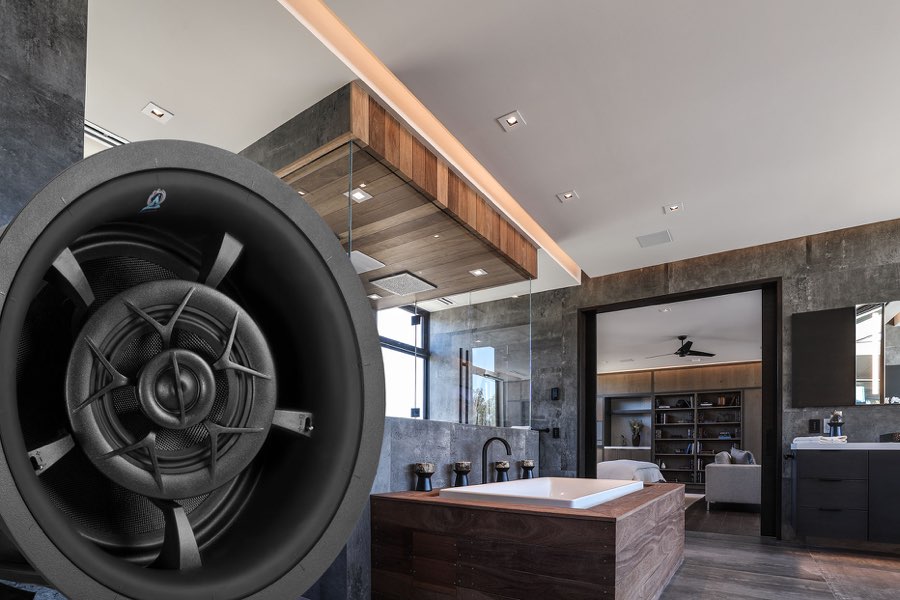
In-Ceiling / In-Wall Speakers – Built-in options that save space and blend seamlessly, perfect for whole-home audio and discreet installations.
Hidden Speakers – Installed behind grilles or panels to disappear visually, ideal for minimalistic interiors.
Surround Sound & Dolby Atmos – Immersive audio setups for home theaters. Dolby Atmos adds height channels for object-based sound that moves around you in 3D space.
Placement, Room Shape & System Scale
Speaker performance depends heavily on where they’re placed:
- Room Size & Shape: Larger rooms may benefit from more or higher-power speakers; irregular shapes can create acoustic challenges best solved by strategic placement or acoustic treatment.
- Placement: Wall, ceiling, and corner placements each change how sound propagates, professional design ensures balanced coverage.
- Single Room vs. Whole-Home:
- Single Room: Focused on one environment (e.g., home theater), prioritizing immersive experience.
- Whole-Home Audio: Distributed media that allows music in multiple rooms with synchronized playback.

Audio Systems for Businesses
Commercial settings have unique requirements. Sound must enhance an environment without overpowering it, support branding or ambiance, and often integrate with paging, safety systems, or digital signage.
Business Audio by Environment
Warehouses & Industrial Spaces
Needs: Intelligible communication, robust & reliable sound in large open areas.
Systems that focus on voice clarity and durability. Weather-resistant and high-output speakers ensure coverage over noise and distance.
Restaurants & Hospitality
Needs: Background music that supports atmosphere without competing with conversation.
- Distributed speaker systems with zoning to control volume in dining versus bar areas.
- Sonos for Business – Offers scalable audio with easy control and scheduling, great for cafes and casual dining venues where music supports the mood.
Retail Environments
Needs: Audio that enhances the customer experience and reinforces branding.
- Systems designed for even coverage across sales floors, integration with announcements, and central control.
- Origin Acoustics + Origin Pro Amps – Professional-grade solutions with precise tuning and distribution for environments like boutiques or flagship stores.
Why Commercial Audio Is Different
- Zoning: Separate areas may require distinct audio sources or volumes (e.g., lobby vs. back-of-house).
- Control & Integration: Business systems often tie into paging, scheduling software, or digital signage.
- Power & Reliability: Commercial amplifiers like Origin Pro series are engineered for sustained, high-efficiency performance.
Understanding Commercial Music Rights
One of the most overlooked aspects of commercial audio is music licensing.
Streaming services designed for personal use (Spotify, Apple Music, etc.) do not include public performance rights. Businesses playing music for customers are legally required to obtain proper licensing.
In the United States, this typically involves licensing from performing rights organizations such as:
- ASCAP
- BMI
- SESAC
Commercial audio platforms — including Sonos for Business — offer music services that include proper commercial licensing. This ensures:
- Legal compliance
- Curated business-appropriate playlists
- Scheduled playback
- Reduced liability risk
Ignoring music licensing can result in fines or legal action. A properly designed commercial audio system includes both the hardware and the correct licensing solution.
Eco Smart Home Pros is a proud reseller of Pandora Cloudcover for business streaming. With options for business messages between songs and the newly introduced digital signage option.
Final Considerations
Whether outfitting a home or business:
- Match system scale to your space: Bigger isn’t always better; strategic placement and proper speaker types matter most.
- Consult a professional: Acoustic challenges and complex environments benefit from experienced design and calibration.
- Plan for growth: Especially with whole-home or business audio, choose systems that can expand or adapt over time.
Choosing the right audio system enhances every space, from your living room’s movie nights to a restaurant’s vibe or a warehouse’s efficiency. With thoughtful planning and the right partners, you’ll achieve sound that’s tailored to your needs and elevates the experience for every listener.
Let’s create #ASmarterTomorrow — together.